
The Warrior Diet

The Warrior Diet is inspired by the eating patterns of ancient warriors, who reputedly ate little during the day and feasted at night. This intermittent fasting schedule involves consuming small amounts of raw fruits and vegetables during the day and a single, large meal in the evening. This approach not only simplifies daily eating patterns but also aligns with natural hunger cues, potentially leading to improved digestion and better nutrient absorption.
Adhering to the Warrior Diet can encourage a focus on food quality, as the large nightly meal becomes a time to consume a variety of nutrients through whole foods. This diet promotes the consumption of unprocessed, nutrient-dense foods, which can lead to improvements in body composition, energy levels, and overall health. However, this method may require a period of adjustment as the body adapts to a substantial evening meal following minimal daytime food intake. The Warrior Diet offers an unconventional yet effective approach to intermittent fasting, suitable for those who prefer a robust meal at the end of the day and are interested in exploring historical eating habits for modern health benefits.
Alternate-Day Fasting
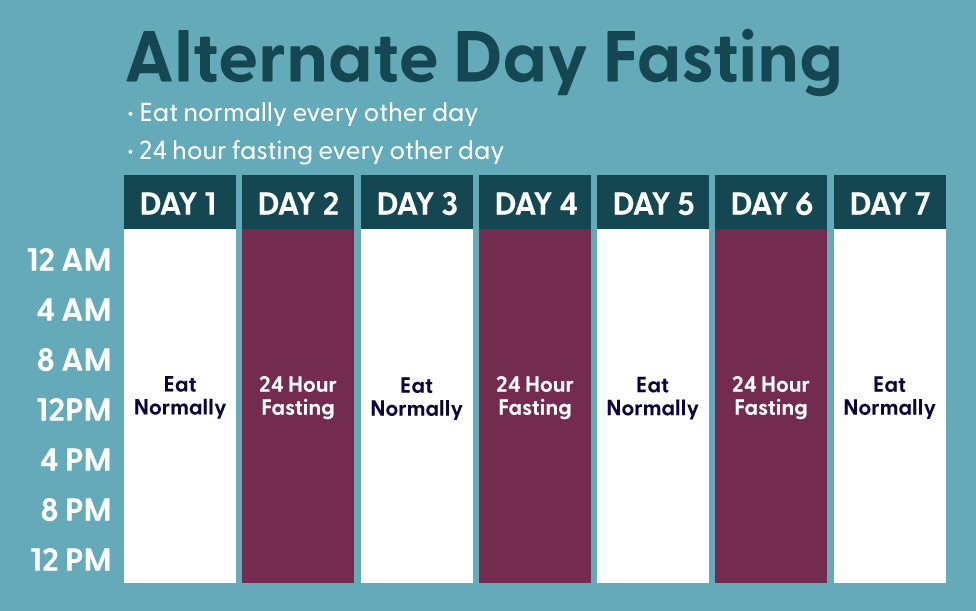
Alternate-Day Fasting (ADF) is an intermittent fasting method where individuals alternate between days of no food restrictions and days of significant calorie reduction or complete fasting. This approach is particularly challenging but can be highly effective for weight loss and improving health markers due to the extended fasting periods. ADF encourages the body to adjust to a more flexible eating pattern, potentially enhancing fat oxidation and promoting greater metabolic flexibility. It’s suitable for those who have previous fasting experience and are looking for a more intense fasting regimen to overcome weight loss plateaus or improve health outcomes.
The key to succeeding with Alternate-Day Fasting lies in mindful eating on non-fasting days and ensuring nutrient intake is sufficient to support overall health. While ADF can lead to significant improvements in insulin sensitivity, cardiovascular health, and reductions in body fat, it requires careful planning to avoid overeating on feeding days. Individuals considering ADF should be prepared for the initial adjustment period, which can include hunger pangs and fatigue as the body adapts. However, many find that these challenges diminish over time as the body becomes accustomed to the new eating pattern, leading to sustainable health benefits and weight loss.
The Importance of Personalization

Selecting the proper intermittent fasting schedule is a deeply personal decision that should take into account individual lifestyle, health status, and wellness goals. No single fasting method works for everyone; personalization is key to finding a sustainable approach that can be maintained long-term. It’s essential to consider factors such as daily schedule, meal preferences, and physical activity levels when choosing a fasting method. Experimenting with different schedules may be necessary to discover which method feels most natural and yields the best results for one’s body and lifestyle.
Consultation with a healthcare provider is crucial before starting any intermittent fasting schedule, especially for individuals with existing health conditions or concerns. A healthcare professional can offer guidance on the most appropriate fasting methods based on medical history and current health status, ensuring safety and effectiveness. Listening to one’s body and making adjustments based on physical and mental responses to fasting is also vital. If a particular fasting schedule leads to undue stress, hunger, or fatigue, it may not be the right fit. The goal of intermittent fasting is to enhance health and well-being, not to create additional health issues, making personalization and adaptability fundamental to success.
Start Your Path to Fasting Success
Finding the ideal intermittent fasting schedule is about blending science with personal preference, aiming for a routine that enhances your health while fitting seamlessly into your lifestyle. It’s a process that encourages patience, self-exploration, and resilience. By tuning into your body’s needs and seeking professional advice, you can navigate the path to wellness with confidence. Let this be your moment to take control of your health journey, embracing intermittent fasting as a tool for lasting change.