
Strengthening Exercises for Joint Stability

Strengthening the muscles surrounding the joints is crucial in preventing hyperextension. Strong muscles provide better support and stability for the joints, reducing the likelihood of overextension. Exercises like leg curls and calf raises strengthen the muscles around the knee, while bicep curls and tricep extensions aid the elbow. Core strengthening exercises like planks and bridges are essential for spinal health.
It’s important to focus on balanced muscle development. Overemphasis on one muscle group can lead to imbalances, increasing the risk of injury. A well-rounded exercise regimen should include strengthening and stretching exercises for optimal joint health. Incorporating strength training 2-3 times a week can significantly enhance joint stability and resilience, reducing the risk of hyperextension.
Improving Flexibility and Range of Motion

Flexibility plays a significant role in preventing hyperextension injuries. Enhanced flexibility ensures that joints can move freely and comfortably within their natural range of motion. Stretching exercises effectively improve flexibility, particularly those targeting the muscles around commonly affected joints. For instance, hamstring stretches benefit the knees, while forearm stretches aid the elbows. Regular stretching not only increases flexibility but also aids in muscle recovery and reduces the risk of stiffness and injuries.
It’s crucial, however, to balance flexibility with strength. Overly flexible joints without adequate muscle support can be just as prone to hyperextension. Thus, a combination of stretching and strengthening exercises is key. Stretching should be done after the muscles are warmed up, either post-exercise or following a light warm-up, to ensure safety and effectiveness. Incorporating flexibility training into a regular fitness routine can enhance joint health and prevent hyperextension injuries.
Posture and Movement Techniques

Adopting correct posture and movement techniques is essential in preventing hyperextension. Maintaining proper alignment in everyday activities, such as lifting or bending, can prevent undue joint stress. When engaging in sports or exercise, being mindful of how the body moves can significantly reduce the risk of overextending the joints. For example, when lifting weights, keeping the spine neutrally aligned and avoiding locking the elbows or knees can prevent hyperextension.
Educating oneself on the biomechanics of different activities can also be beneficial. This understanding can help in adjusting movements to reduce the risk of injury. Additionally, incorporating activities that improve proprioception, or the body’s ability to sense its position and movement in space, can enhance coordination and joint awareness. Practices like yoga or Pilates, focusing on controlled movements and balance, can be particularly helpful.
Using Protective Equipment and Supports
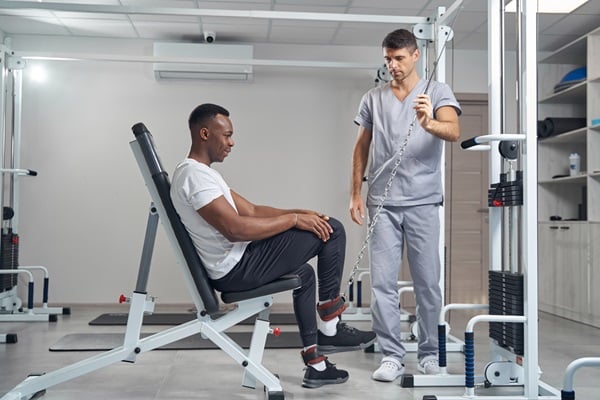
In some cases, using braces or supports can be an effective strategy to prevent hyperextension. These devices can provide additional stability and support to vulnerable joints during high-risk activities. For example, wearing a knee brace can benefit those with a history of knee hyperextension, especially during sports or heavy lifting.
However, it’s important to choose the right type of support for the specific activity and to use it correctly. Over-reliance on supports can lead to muscle weakness, so they should be used judiciously. Consulting with a healthcare professional or a sports therapist can guide the appropriate use of protective equipment.
The Bottom Line
Preventing hyperextension is crucial for maintaining joint health and overall physical well-being. Understanding the mechanics of hyperextension, recognizing the risks, and implementing effective prevention strategies are key components in safeguarding against these injuries. Incorporating proper warm-up routines, strengthening and flexibility exercises, correct posture and movement techniques, and, when necessary, using protective equipment can reduce the risk of hyperextension. Moreover, seeking professional guidance can provide personalized insights and recommendations, further enhancing prevention efforts.