Contents
Unexplained Bruising Might Be a Sign of Blood Disorders

Bruising easily or finding bruises that seem to appear without any clear injury can be a sign of trouble within the blood. Healthy blood contains platelets and clotting factors that help prevent bruising from minor bumps or injuries. When these components are missing or not working properly, even small incidents can cause noticeable and widespread bruising. Conditions like leukemia, hemophilia, or severe vitamin deficiencies often lead to these changes in the skin.
It is essential to pay attention to where and how often bruises appear on the body. Frequent bruising on the arms, legs, or back without a known cause should raise concern and prompt a medical visit. Blood tests can quickly reveal whether there is an issue with clotting or blood cell production. Catching these signs early makes it much easier to manage or treat the underlying condition before it becomes life-threatening.
Thickened, Tight Skin Could Hint at Scleroderma

If the skin begins to feel unusually thick, stiff, or tight, it could be an early warning sign of scleroderma. Scleroderma is a rare autoimmune disorder where the body produces too much collagen, causing the skin to harden. In the beginning, this change may only affect the hands, arms, or face, making movements feel restricted. Even though it might seem like a minor change, tight skin can be a sign of something much more serious.
As scleroderma progresses, it can also affect the lungs, heart, and kidneys, creating life-threatening complications. Early diagnosis and treatment are important for slowing down the disease and preserving organ function. If you notice thickening skin along with joint pain, digestive problems, or shortness of breath, it is vital to see a doctor. Getting medical help early can lead to better outcomes and a more manageable condition over time.
Tiny Red or Purple Bumps Might Signal Vasculitis

Small red or purple bumps that suddenly appear on the skin might be more than just a mild irritation. These bumps could be signs of vasculitis, a condition where blood vessels become inflamed and damaged. Vasculitis can start with tiny spots on the legs, arms, or torso before causing more serious health issues inside the body. Paying attention to the early changes on the skin can help catch the condition before it worsens.
As the disease progresses, the skin bumps can become painful, start to ulcerate, or be joined by symptoms like fever, fatigue, and joint pain. If untreated, vasculitis can harm vital organs and lead to permanent damage. A doctor can confirm the diagnosis with blood tests, imaging, or a skin biopsy. Early treatment with medication can help reduce inflammation and protect the blood vessels from further injury.
When to See a Doctor About Strange Skin Changes
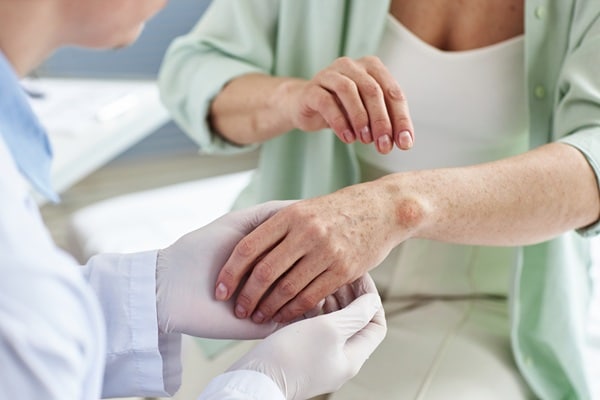
Not every skin change means something serious, but it is important to know when to seek help. If a new spot, patch, bump, or discoloration appears and does not go away, it is a good idea to get it checked. Changes that spread, hurt, itch, bleed, or come with other symptoms should never be ignored. Trusting your instincts and acting quickly can lead to earlier diagnoses and better treatment options.
Taking clear photos of skin changes and noting when they started can be helpful during a doctor’s visit. Skin symptoms combined with fatigue, fever, weight loss, or digestive issues should raise even more concern. A dermatologist or primary care provider can run tests to find the root cause and offer proper care. Acting early can make a huge difference in catching hidden health problems before they become more serious.
Do Not Miss What Your Skin Is Showing You
Your skin is a powerful tool for spotting hidden health problems before they grow more serious. Paying attention to unusual changes and trusting when something feels wrong can make a real difference in how quickly you get the care you need. Even small shifts in color, texture, or appearance are worth noticing and acting on. Taking charge of your health starts by listening to the signals your body sends every day. Sometimes, the most minor changes are the ones that matter most.